

I Don’t Know What I Would
Have Done Without Him...
Facing Federal Drug Conspiracy Charges in Chicago Under 21 U.S.C. § 846
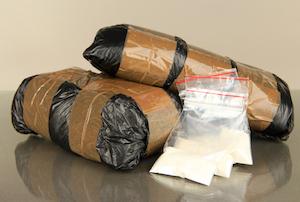
As a long-time criminal defense lawyer based in Chicago, I’ve represented countless individuals accused of serious federal crimes. One of the most devastating charges a person can face in this city is being indicted under 21 U.S.C. § 846, which governs conspiracy to commit a drug trafficking offense under federal law. Unlike many Illinois state charges, § 846 doesn’t require actual possession or distribution—it targets agreements between two or more individuals to commit a drug crime. And the consequences are life-changing.
While most criminal cases in Illinois are prosecuted under state law—either as misdemeanors or felonies—conspiracy drug charges under § 846 are exclusively federal and carry mandatory minimum prison sentences. In Chicago, these indictments are filed in the U.S. District Court for the Northern District of Illinois, often after lengthy DEA investigations involving wiretaps, confidential informants, controlled buys, and surveillance.
Federal prosecutors don’t bring these cases lightly. If you or someone you care about has been indicted under § 846, you’re facing not only the possibility of 10 years to life in federal prison, but also loss of assets, years of supervised release, and long-term consequences that follow you for life. Unlike state misdemeanors or even low-level felonies, federal sentencing is driven by mandatory guidelines that limit a judge’s discretion.
Chicago’s West Side, South Side, and outlying neighborhoods like Englewood, Lawndale, and Austin are frequent targets of multi-defendant drug conspiracy cases. The alleged conspiracies often involve heroin, cocaine, methamphetamine, or fentanyl—any of which can trigger mandatory minimums based on the weight or quantity attributed to the group. The government doesn’t have to prove you physically handled the drugs—they only need to establish that you agreed to participate and knew the object of the conspiracy.
This charge is one of the most complex and unforgiving in the federal system. Before you make a single decision, speak with an experienced Chicago criminal defense lawyer who has handled federal conspiracy indictments and knows how to fight back.
How a Criminal Case Begins and What § 846 Conspiracy Actually Means
Federal criminal cases under 21 U.S.C. § 846 begin long before the accused even knows they’re being watched. The DEA, FBI, ATF, or a local task force may spend months or even years gathering evidence. These investigations often involve Title III wiretaps, GPS trackers, surveillance teams, pole cameras, and controlled buys using confidential informants or undercover agents.
Unlike state court prosecutions where someone is arrested immediately after the offense, most federal drug conspiracy cases start with a sealed indictment issued by a grand jury. That means you can be indicted without your knowledge—and only learn about the charge when agents knock on your door with an arrest warrant.
The charge itself—21 U.S.C. § 846—is deceptively simple. It makes it a federal offense to conspire to violate the Controlled Substances Act, even if the underlying crime (like distribution or possession with intent) was never completed. In other words, just agreeing to participate in a drug trafficking operation, even indirectly, can result in the same penalties as if you had delivered the drugs yourself.
There are two major factors that drive sentencing in these cases:
- The type and quantity of drugs allegedly involved
- Your role in the conspiracy and your prior criminal history
If the indictment alleges distribution of 500 grams or more of cocaine, for example, you’re facing a mandatory minimum of 5 years in prison. If it’s 5 kilograms or more, or 400 grams of fentanyl, the sentence becomes 10 years to life.
Illinois law also criminalizes conspiracy, but federal prosecutors prefer § 846 for the broader power it gives them—especially when it comes to asset forfeiture and wiretap authority. Even if your role was limited, the law allows for “relevant conduct” attribution, meaning you can be sentenced for the entire drug weight moved by the conspiracy, not just your individual actions.
Understanding how conspiracy works under federal law is critical to your defense. Without proper legal representation, you’re unlikely to recognize potential challenges to the indictment, violations of your rights, or weaknesses in the government’s theory of the case.
A Fictional Chicago Case Example and Federal Trial Defense Strategy
Let’s look at a fictional example based on real case patterns in Chicago’s South Side. A man is arrested in Woodlawn after federal agents execute a search warrant on his home. They claim he’s part of a larger fentanyl trafficking ring that spans from the West Side to Northwest Indiana. The indictment includes eight defendants, all charged under 21 U.S.C. § 846. The government alleges that between them, the group distributed more than 400 grams of fentanyl—triggering a 10-year mandatory minimum.
My client insists he had no knowledge of the broader operation. The agents recovered no drugs from his home, but they found a phone with coded messages and a large amount of cash. The case includes wiretaps of conversations where other defendants mention him by a nickname.
As his Chicago federal defense lawyer, I start by examining the indictment for flaws—did the grand jury hear sufficient evidence to charge my client? I file a motion to sever his case from the others, arguing that the alleged conspiracy is too broad and prejudicial. I also challenge the admissibility of the text messages, arguing they were obtained in violation of the Fourth Amendment.
At trial, we focus on knowledge and intent. To convict someone of conspiracy, the government must prove that the defendant knowingly agreed to participate. We show that the nickname on the wiretaps could refer to someone else, that the texts are ambiguous, and that no drugs or surveillance tie my client to any actual hand-to-hand transaction.
The jury finds reasonable doubt—and returns a not guilty verdict. That result wouldn’t have been possible without early investigation, pretrial motion practice, and a deep understanding of federal conspiracy law. Many clients don’t realize how important these early steps are until it’s too late.
Evidence Used in § 846 Cases and Why You Need an Attorney for Every Stage
Federal conspiracy cases are evidence-heavy. Prosecutors rely on surveillance footage, phone records, informant testimony, cell tower data, social media messages, and financial records. Unlike state prosecutors, the U.S. Attorney’s Office has the time and resources to build intricate, multi-layered cases. That’s why the role of a defense lawyer is crucial at every stage.
When you’re charged with conspiracy, the prosecution may not have physical evidence linking you to drugs. Instead, they’ll use circumstantial evidence—text messages, audio recordings, jail calls, or bank deposits—to suggest your involvement. Often, the most damaging evidence comes from co-defendants who agree to cooperate in exchange for reduced sentences.
As a Chicago criminal defense attorney, I challenge this evidence early and aggressively. I review whether search warrants were supported by probable cause, whether wiretap procedures followed federal guidelines, and whether informant testimony is reliable or tainted by incentive deals.
The trial process in federal court includes arraignment, discovery, motion hearings, pretrial conferences, and, if necessary, jury trial. At each stage, your lawyer plays a critical role:
During discovery, we examine the government’s case and build a defense plan.
In motion practice, we challenge unlawful searches, defective indictments, or evidence tainted by entrapment.
At trial, we attack the credibility of government witnesses and highlight inconsistencies.
If convicted, we fight for sentence reductions under the safety valve provision or other mitigating factors.
The stakes are too high to take chances. With mandatory sentencing, even a small error or missed deadline can mean a decade behind bars. A good lawyer does more than show up to court—they guide you through the system, protect your rights, and push back against the full weight of federal prosecution.
21 U.S.C. § 846 Defense FAQs
Can I be charged under 21 U.S.C. § 846 if I never handled drugs?
Yes. You don’t need to touch, sell, or transport drugs to be charged with conspiracy. The government only needs to prove that you agreed to participate in a drug offense and understood the objective of the conspiracy. That’s why even minor players or those who only acted as lookouts or couriers can face the same penalties as leaders.
Are § 846 conspiracy charges filed in state or federal court?
These are federal charges and are prosecuted in the United States District Court. In Chicago, that’s the Northern District of Illinois, often at the Dirksen Federal Building downtown. These cases fall outside of Illinois criminal court jurisdiction and follow different rules, including the Federal Rules of Criminal Procedure.
Can my case be dismissed if they only have wiretap evidence?
Possibly. Wiretap evidence must meet strict standards under Title III of the Omnibus Crime Control and Safe Streets Act. If the wiretap authorization lacked probable cause or failed to minimize irrelevant conversations, your Chicago federal defense attorney may file a motion to suppress that evidence.
What is the mandatory minimum sentence under 21 U.S.C. § 846?
That depends on the type and amount of drugs. For example, 500 grams of cocaine carries a 5-year minimum, while 5 kilograms or 400 grams of fentanyl carries a 10-year minimum. Prior drug convictions can raise those minimums even higher. There are some exceptions under the safety valve or substantial assistance rules, but these require strong advocacy.
How is a federal conspiracy charge different from a state drug charge in Illinois?
State drug charges usually involve possession, delivery, or manufacturing under the Illinois Controlled Substances Act (720 ILCS 570/). Conspiracy charges at the federal level focus on group conduct and allow the government to assign drug weight to all participants. Penalties are also harsher and include federal prison time, supervised release, and asset forfeiture.
Can I get probation for a federal drug conspiracy charge?
Probation is rare in federal drug conspiracy cases due to mandatory minimums. However, if you qualify for the safety valve or provide substantial assistance, the court may sentence you below the minimum. A knowledgeable Chicago criminal defense lawyer will assess whether these options apply in your case.
Will a § 846 conviction affect my future beyond prison time?
Yes. A conviction will remain on your record permanently. It can lead to immigration consequences, loss of professional licenses, ineligibility for federal benefits, and asset forfeiture. That’s why it’s critical to work with a defense lawyer who can either beat the charge or limit the long-term damage.
What should I look for in a Chicago criminal defense attorney for federal charges?
Experience in federal court, knowledge of the sentencing guidelines, and familiarity with § 846 conspiracy strategies are essential. You also want someone who is responsive, transparent, and has handled multi-defendant indictments in the Northern District of Illinois.
Why You Need a Federal Criminal Defense Lawyer—and Why to Choose David L. Freidberg
If you’ve been indicted under 21 U.S.C. § 846 in Chicago, you’re facing a case that is fundamentally different from a typical drug arrest. This isn’t a state-level possession case. This is a high-stakes federal conspiracy charge with mandatory sentencing rules that don’t allow room for error or delay.
Trying to handle a federal case with a state-only attorney, a public defender with a heavy caseload, or no representation at all is a mistake. Federal prosecutors are aggressive, methodical, and well-funded. You need someone who knows how federal court works, how these charges are constructed, and how to fight them from the inside out.
At The Law Offices of David L. Freidberg, I’ve spent decades representing clients in both federal and state courts across Illinois. I understand how to challenge conspiracy allegations, dismantle weak evidence, and protect your rights in a system that’s not designed to give you the benefit of the doubt.
Call The Law Offices of David L. Freidberg Today – 24/7 Defense for Federal Conspiracy Charges
If you’ve been charged under 21 U.S.C. § 846 or are under investigation for federal drug conspiracy in Chicago, Cook County, DuPage County, Will County, or Lake County, call me immediately.
The Law Offices of David L. Freidberg offers aggressive defense for federal charges, including conspiracy to distribute controlled substances, with free consultations available 24/7.
Contact us today at (312) 560-7100 or toll-free at (800) 803-1442 for a free consultation. The sooner we talk, the sooner we begin building your defense.