

I Don’t Know What I Would
Have Done Without Him...
Will I Lose My License Immediately After a DUI Arrest in Chicago?
DUI Arrests, License Consequences, and Criminal Charges in Chicago, Illinois
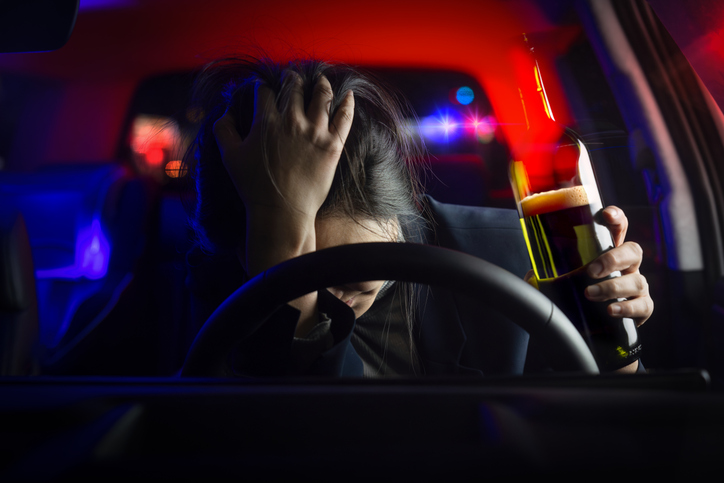
Chicago sees thousands of DUI arrests every year, from late‑night traffic stops on Lake Shore Drive to neighborhood stops in Lincoln Park, Logan Square, Hyde Park, and the South Side. One of the first questions I hear from clients after a DUI arrest is whether they lose their driver’s license right away. The answer is more complicated than most people expect, and misunderstanding it often leads to avoidable damage.
Illinois law separates DUI cases into two parallel tracks. One involves the criminal charge, and the other involves the driver’s license consequences handled by the Illinois Secretary of State. A DUI arrest does not automatically take away your license at the roadside, but it does trigger a process that can result in suspension if it is not challenged properly and on time.
All crimes in Illinois fall into either misdemeanors or felonies. Most first DUI offenses are charged as Class A misdemeanors under 625 ILCS 5/11‑501, punishable by up to 364 days in jail, fines, mandatory alcohol education, and a criminal record that cannot be sealed or expunged. Certain DUI cases are charged as felony aggravated DUI, including third offenses, DUI involving injury, DUI with a minor in the vehicle, or DUI while driving on a suspended or revoked license. Felony DUI charges carry prison exposure and lifelong consequences.
From the moment a DUI arrest occurs, law enforcement begins collecting evidence that will be used both to suspend your license and to prosecute the criminal case. Police reports, officer observations, field sobriety testing, breath or blood testing, and video recordings all become part of the record. A Chicago criminal defense lawyer must act quickly to protect your license and your future.
Many drivers mistakenly believe that license loss only happens after conviction. In reality, Illinois allows license suspensions to occur before your DUI case is resolved. That is why immediate legal action is essential.
Will You Lose Your License Immediately After a DUI Arrest in Chicago?
After a DUI arrest in Chicago, your physical driver’s license is usually not taken on the spot unless other issues are present, such as a revoked license or outstanding suspension. Instead, the officer issues a Notice of Statutory Summary Suspension. This notice acts as a temporary driving permit for a limited period and warns you that your driving privileges will be suspended on a future date.
Under Illinois law, statutory summary suspension typically begins 46 days after the arrest, not immediately. This delay exists so drivers have an opportunity to challenge the suspension in court. If you do nothing, the suspension goes into effect automatically. If you act quickly with the help of a Chicago DUI lawyer, you may be able to stop it entirely.
The length of the suspension depends on whether you submitted to chemical testing. If you took a breath or blood test and registered a result of 0.08 or higher, a first‑time offender faces a six‑month suspension. If you refused testing, the suspension increases to twelve months. Second offenses bring much harsher penalties, including multi‑year suspensions.
What many people fail to realize is that the license suspension case is separate from the criminal DUI case. Even if the DUI charge is later dismissed, the license suspension can still stand unless it is successfully challenged. This is one of the most common mistakes I see when people attempt to handle DUI cases without a lawyer.
Judges in Cook County expect defendants to understand and comply with deadlines related to license hearings. Missing the filing window can permanently limit your options. A Chicago criminal defense attorney files a petition to rescind the suspension and forces the State to prove that the stop, arrest, and testing complied with the law. Without that challenge, the Secretary of State proceeds as if guilt is already established.
How DUI Cases Begin, How Evidence Is Collected, and How Criminal Prosecutions Move Forward
Every DUI case begins with a police encounter. The officer must have a lawful reason to stop your vehicle, such as a traffic violation or reasonable suspicion of impairment. Once stopped, the investigation expands quickly. Officers observe speech, coordination, odor, and demeanor. Field sobriety tests are administered, though they are subjective and often performed incorrectly. Chemical testing is requested, and refusal carries its own penalties.
Law enforcement collects multiple forms of evidence in DUI cases. These include officer testimony, dash camera footage, body camera footage, breathalyzer results, blood or urine testing, field test performance, and statements made by the driver. In some cases, accident reconstruction evidence or witness statements are added.
After arrest, the case moves into the criminal court system. The accused is given a court date, and the prosecutor formally files charges. At the first appearance, conditions of release may be imposed. These can include alcohol monitoring, reporting requirements, travel restrictions, and court supervision conditions. This is where many defendants begin to struggle.
Missed appointments, failed check‑ins, late payments, or curfew violations are often labeled as technical violations. Judges distinguish these from substantive violations such as new criminal arrests, failed drug tests, or driving on a suspended license. However, repeated technical violations damage credibility and reduce the judge’s willingness to offer leniency.
A Chicago criminal defense lawyer plays a critical role at every stage of this process. Evidence must be reviewed, discovery requested, motions filed, and hearings scheduled. Without an attorney managing deadlines and strategy, defendants often fall behind and lose leverage.
How Judges Treat Missed Appointments, Check‑Ins, Curfews, and Other Violations in DUI Cases
When someone is released while a DUI case is pending, the court imposes rules. These rules are not suggestions. Judges in Chicago courts expect strict compliance, even for first‑time offenders.
Missed court appearances are treated harshly. A single failure to appear can result in a bench warrant. Late payments or missed reporting appointments may not result in immediate incarceration, but they do influence judicial discretion. Judges consider patterns. One mistake may be forgiven. Repeated issues are not.
Technical violations are treated differently from substantive violations, but they still matter. A missed check‑in might not lead to immediate jail, but it can eliminate the possibility of supervision or probation. A curfew violation may prompt increased monitoring. Failure to pay fines can result in additional penalties or bond modifications.
Substantive violations, such as being arrested for another offense or driving while suspended, often result in immediate custody and bond revocation. Judges rarely show patience in those situations.
A Chicago DUI lawyer works proactively to address violations before they spiral out of control. Communication with the court, documentation, and early intervention can prevent minor mistakes from destroying a defense strategy.
DUI Defense Strategy and a Realistic Chicago Case Example
Consider a fictional case in the River North area. A driver is stopped late at night after an officer claims improper lane usage. The driver admits to drinking earlier in the evening. Field sobriety tests are administered on uneven pavement. A breath test is taken at the station.
A statutory summary suspension notice is issued. The driver believes the case is straightforward and delays contacting an attorney. Weeks later, the suspension goes into effect. Meanwhile, pretrial conditions require check‑ins and alcohol monitoring. One appointment is missed due to a work conflict. The court views this as noncompliance.
Once retained, the defense focuses on the initial stop. Video footage shows no lane violation. A motion to suppress is filed, arguing the stop lacked reasonable suspicion. The judge grants the motion. The DUI charge is dismissed, but the license suspension remains because the hearing deadline passed.
This scenario illustrates why early representation matters. A Chicago criminal defense lawyer does not simply react. The lawyer protects your license, your record, and your leverage from day one.
Legal Defenses, Attorney Qualifications, and What to Ask at Your Free Consultation
DUI defenses depend on the facts. Illegal stops, improper testing, lack of probable cause, unreliable breath results, and constitutional violations all play a role. Medical conditions and faulty equipment can also undermine the prosecution’s case.
Choosing the right attorney matters. Look for courtroom experience in Cook County, familiarity with DUI science, and a history of handling license suspension hearings. Ask who will handle your case personally. Ask how often the attorney challenges suspensions. Ask about trial experience.
A Chicago criminal defense lawyer should explain risks clearly and outline a plan. DUI defense is not about shortcuts. It is about preparation and persistence.
Chicago DUI Defense FAQs Under Illinois Law
Will my license be suspended even if my DUI case is dismissed?
Yes, unless the suspension is successfully challenged. The license case is separate from the criminal case. A Chicago DUI lawyer can explain how to fight both.
How long do I have to challenge a DUI license suspension in Illinois?
You generally have a short window after arrest to file a petition. Missing it limits your options. A Chicago criminal defense attorney ensures deadlines are met.
Is a DUI a misdemeanor or felony in Chicago?
Most first DUIs are misdemeanors. Aggravated DUIs are felonies. A Chicago DUI lawyer evaluates how charges are classified.
What happens if I miss a court date for a DUI?
A bench warrant may be issued. Judges take attendance seriously. A Chicago criminal defense lawyer should be contacted immediately.
Can I drive while my DUI case is pending?
Possibly, depending on license status and permits. This must be handled carefully with a Chicago DUI lawyer.
Does refusing a breath test help my case?
Refusal creates a longer suspension but removes certain evidence. The strategy must be evaluated by a Chicago criminal defense attorney.
Will a DUI conviction stay on my record forever?
Yes. DUI convictions cannot be sealed or expunged in Illinois.
Do I really need a lawyer for a first DUI?
Yes. Even first offenses carry lasting consequences. A Chicago DUI lawyer protects your record and license.
Why You Need an Attorney and Why Clients Choose The Law Offices of David L. Freidberg
Handling a DUI case alone is a costly mistake. Prosecutors and judges expect compliance with technical rules and deadlines. Without legal guidance, defendants lose opportunities before they realize what is happening.
The Law Offices of David L. Freidberg has decades of experience defending DUI cases across Chicago and surrounding counties. We understand how license suspensions, criminal charges, and court expectations intersect. We know how to protect your future.
Call The Law Offices of David L. Freidberg for DUI Defense in Chicago
If you have been arrested for DUI in Chicago or anywhere in Cook County, DuPage County, Will County, or Lake County, call The Law Offices of David L. Freidberg immediately. We offer free consultations 24/7.
Whether you’re charged in downtown Chicago, Skokie, Maywood, Bridgeview, or Rolling Meadows, we’re ready. We appear regularly in courtrooms throughout Cook, DuPage, Will, and Lake Counties. And we don’t treat aggravated speeding as just another moving violation.
If you were arrested in Chicago, protect your future by contacting The Law Offices of David L. Freidberg. We have decades of experience handling DUI cases in Illinois. Our firm is available 24/7 to provide the legal defense you deserve.
Contact us today at (312) 560-7100 or toll-free at (800) 803-1442 for a free consultation. We’re available 24/7 to serve clients throughout Illinois, Cook County, DuPage County, Will County, and Lake County.