

I Don’t Know What I Would
Have Done Without Him...
Why You Need a Private Illinois DUI Defense Attorney
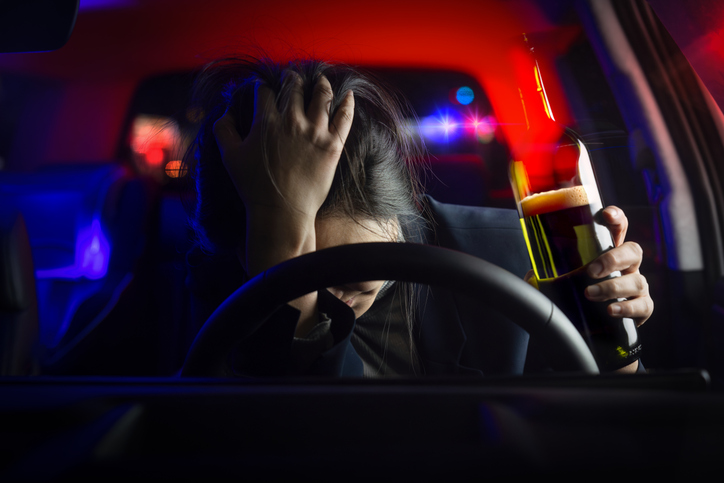
I’ve practiced criminal defense for decades across Chicago—from River North to South Loop, Logan Square, and Wicker Park. The city’s nightlife, restaurants, and sporting events attract millions every year, and DUI arrests often follow a night that started innocently. Whether you’re stopped near the Kennedy Expressway, on Lake Shore Drive, or pulled over leaving a concert at United Center, you can suddenly find yourself facing handcuffs and the full weight of Illinois law.
Under 625 ILCS 5/11-501, driving or being in actual physical control of a vehicle while under the influence of alcohol or drugs—or with a blood-alcohol concentration of .08 percent or higher—is a criminal offense. A first-time DUI is generally a Class A misdemeanor, punishable by up to 364 days in the Cook County Jail and a $2,500 fine. If a crash causes great bodily harm or death, or if you have prior convictions, it can escalate to a Class 4 through Class 2 felony, carrying potential prison sentences from 1 to 7 years or more under Illinois sentencing guidelines.
Every arrest begins with an officer’s suspicion. In neighborhoods like Lincoln Park or Bronzeville, police often cite weaving, speeding, or even a broken taillight as the basis for a stop. What happens next—the questions, field sobriety tests, and breathalyzer request—determines much of the case that follows. At this moment, your rights begin to matter most.
How Illinois Criminal Cases Begin and Move Through the Cook County Courts
After an arrest, most DUI defendants in Chicago appear first at the Cook County Circuit Court, usually the Richard J. Daley Center or Branch 44 at 26th and California. Cases from the suburbs may be assigned to Skokie, Rolling Meadows, Bridgeview, or Markham. Each courthouse follows Illinois Supreme Court Rules for bail hearings, discovery, and pre-trial motions.
Police reports, video, and chemical-test results are sent to the State’s Attorney’s Office, which formally files the complaint. A first appearance is scheduled, where conditions of bond are set. If you refused a breath or blood test, the Secretary of State automatically begins a Statutory Summary Suspension of your driver’s license under 625 ILCS 5/2-118.1—often lasting six to twelve months. I immediately request a hearing to contest that suspension, because the officer’s lack of probable cause or procedural errors can restore your driving privileges early.
From there, the criminal process includes discovery, motion hearings, plea discussions, and trial. Every stage carries risks that only an experienced Chicago DUI attorney can manage—especially in Cook County, where local procedures differ from those in DuPage or Will County. Prosecutors here handle hundreds of cases daily, and without a lawyer who knows how to protect you, your file can become another statistic.
What Law Enforcement Tries to Collect—and How a Private Lawyer Fights Back
Officers build DUI cases through multiple forms of evidence. They rely on dash-cam and body-cam video, field sobriety test results, breathalyzer printouts, and witness statements. Some even try to use statements you made on the roadside before you were read your rights. Under Miranda v. Arizona and the Illinois Constitution, Article I, Section 10, those statements may be inadmissible if the officer failed to advise you properly.
A private defense attorney scrutinizes every element of that evidence. For example, in a recent case from the South Loop, my client was stopped at 2 a.m. after leaving a business dinner. The squad-car video showed he performed the “walk-and-turn” test on an uneven sidewalk beside a construction zone. By comparing his performance to the National Highway Traffic Safety Administration’s own manual, I demonstrated that the officer administered the test incorrectly. The prosecutor dismissed the DUI charge and reduced the case to a non-alcohol-related traffic infraction—saving my client’s record, career, and license.
Penalties, Punishments, and Collateral Consequences Under Illinois Law
A DUI conviction in Illinois follows you far beyond fines and jail. Under 625 ILCS 5/6-205, your driver’s license can be revoked for one year on a first offense, and longer for subsequent convictions. You may also face mandatory alcohol evaluation and treatment, probation, community service, and installation of a Breath Alcohol Ignition Interlock Device (BAIID).
Felony DUIs under 625 ILCS 5/11-501(d) are particularly severe. A third DUI is a Class 2 felony (three to seven years in prison), while a fourth or fifth offense can become a Class 1 or Class X felony, with potential sentences exceeding a decade. Conviction also leads to criminal record stigma, difficulty renting an apartment, job loss, professional-license discipline, higher insurance rates, and travel restrictions. These ripple effects often cause more long-term harm than any single court penalty.
For professionals—doctors, nurses, teachers, or city employees—the Illinois Department of Financial and Professional Regulation and local licensing boards can open disciplinary investigations. A private DUI defense lawyer ensures that one mistake does not destroy an entire career.
The Illinois Criminal Trial Process and Why Representation Matters
Once charges are filed, the prosecution must prove guilt beyond a reasonable doubt. The case proceeds through several critical phases: arraignment, pre-trial motions, plea negotiations, bench or jury trial, and sentencing. At each step, I work to weaken the state’s evidence and protect constitutional rights.
In Chicago’s DUI courtrooms, successful defense often turns on procedural details—was the traffic stop lawful under People v. Hackett, 2012 IL 111781? Was the breathalyzer maintained and calibrated per Illinois Administrative Code, Title 20, §1286? Did the arresting officer observe you for the required continuous 20 minutes before testing? Small errors can mean big victories.
During trial, I cross-examine officers on training, lighting, timing, and inconsistencies. In one Logan Square case, we exposed that the arresting officer used a portable breath test device not approved by the Illinois State Police. The judge found the evidence unreliable, and the DUI charge was dismissed with prejudice.
Potential Legal Defenses Available in Illinois DUI Cases
Every case demands a tailored defense strategy. Common approaches include:
- Lack of probable cause: the officer had no lawful reason to stop or detain you under 725 ILCS 5/114-12.
- Improper testing procedures: invalid breath or blood results due to equipment or chain-of-custody issues.
- Medical conditions: certain neurological or balance issues can mimic intoxication signs.
- Violation of constitutional rights: unlawful search or seizure, coerced statements, or absence of counsel.
- No proof of actual physical control: sleeping in a parked car does not always equal driving under People v. Cisneros, 2013 IL App (3d) 110851.
As your attorney, my role is to identify and prove these weaknesses before trial, or leverage them to negotiate reductions to reckless driving (625 ILCS 5/11-503) or court supervision, which can avoid conviction entirely.
Qualities to Look For—and Questions to Ask—When Hiring a Chicago Criminal Defense Lawyer
When your freedom is at stake, you need more than a public defender juggling a hundred files. A private Illinois DUI defense lawyer offers time, investigation, courtroom experience, and accessibility. You want an attorney who has tried cases before every Cook County judge, who knows the prosecutors by name, and who understands how evidence plays differently in Bridgeview than in Skokie.
During a free consultation, ask meaningful questions:
- How many DUI cases have you defended in Cook County this year?
- What strategies do you use to challenge breath or blood tests?
- Will you personally appear at every court date?
- What outcomes have you achieved in similar situations?
- How do you communicate updates and respond to urgent calls?
At The Law Offices of David L. Freidberg, every client has my direct number. I treat each file as if it were my own license, my own career, and my own family’s future on the line.
Why Defendants Need Private Representation—and Why It’s a Mistake to Go Without
Illinois law does not require you to hire a private attorney—but experience shows what happens when people don’t. Public defenders are skilled and dedicated, yet the reality in Cook County’s crowded dockets is limited time. Many defendants see their lawyer for the first time minutes before court. That’s not preparation; that’s survival.
Private representation allows for independent investigation, expert witnesses, and a defense strategy built around your life—not just your file. Without it, you risk missing opportunities to suppress evidence, reinstate your license, or secure supervision instead of conviction. Once a guilty plea is entered, reversing it is nearly impossible.
In neighborhoods like Uptown or Pilsen, I’ve represented nurses, rideshare drivers, and young professionals whose livelihoods depended on driving. By contesting field tests, cross-examining lab technicians, and presenting character witnesses, I’ve helped countless Chicagoans keep their licenses and their jobs. The difference came down to having an attorney who knew what to do before the first court date.
Why Choose The Law Offices of David L. Freidberg
For over 25 years, I’ve defended individuals charged with DUI and all criminal offenses throughout Cook, DuPage, Will, and Lake Counties. My approach combines immediate action with long-term protection. From filing the motion to rescind your license suspension to contesting evidence at trial, every step is strategic.
I know the prosecutors, judges, and police protocols. I know which discovery requests reveal missing video, which officers fail to maintain certification, and which laboratories mis-label samples. That knowledge only comes from decades inside Chicago’s courtrooms.
When your driver’s license, record, and reputation are on the line, you deserve a defense designed around you—not the system’s convenience.
Chicago and Cook County DUI Defense FAQs
How long does a DUI case take in Chicago?
Most first-offense DUI cases last between three and nine months, depending on discovery delays, motion hearings, and court backlogs at the Daley Center or 26th and California. Complex or felony DUIs can extend over a year.
Can I drive after a DUI arrest?
Unless your lawyer successfully contests the Statutory Summary Suspension, your license will be suspended 46 days after arrest. I can petition the court for a Monitoring Device Driving Permit allowing travel to work or school.
What happens if I refused the breathalyzer?
Refusal increases the license suspension period, but it often strengthens your defense because the state lacks chemical proof of intoxication. We can challenge the suspension under 625 ILCS 5/2-118.1.
Are field sobriety tests mandatory in Illinois?
No. You are not legally required to perform them. Officers rarely explain that refusal cannot be used as direct evidence of guilt. A private attorney ensures the record reflects that fact.
Will a DUI show on my criminal record forever?
Yes, unless reduced to a lesser offense or court supervision. Illinois does not allow expungement of DUI convictions under 20 ILCS 2630/5.2. Another reason to fight for a dismissal or reduction before pleading.
Can a DUI be reduced to reckless driving?
Yes, through negotiation or litigation. If your blood-alcohol concentration was close to the limit, or procedural issues exist, prosecutors may agree to reduce the charge, avoiding a permanent criminal record.
What if I’m not a Chicago resident?
Out-of-state drivers arrested in Chicago still face Illinois sanctions, and their home state will likely reciprocate. I regularly defend Indiana, Wisconsin, and Michigan drivers stopped near downtown Chicago or O’Hare.
Do I need to appear at every court date?
In misdemeanor cases, your attorney can often appear on your behalf under Supreme Court Rule 431. However, attending important hearings shows respect to the court and can positively influence outcomes.
How much does a private DUI lawyer cost?
Fees vary based on complexity, but most cases are handled for a flat fee that includes pre-trial motions and hearings. A conviction’s hidden costs—loss of work, insurance increases, and license revocation—far exceed legal fees.
Can I represent myself?
Technically yes, but judges strongly discourage it. Illinois DUI law is technical and time-sensitive. Without a trained advocate, you could unintentionally waive defenses or miss filing deadlines that could have saved your license.
When You Need a Fighter, Call Us!
If you were arrested in Chicago, protect your future by contacting The Law Offices of David L. Freidberg. We have decades of experience handling criminal, DUI, and traffic cases in Illinois. Our firm is available 24/7 to provide the legal defense you deserve.
Contact us today at (312) 560-7100 or toll-free at (800) 803-1442 for a free consultation. We’re available 24/7 to serve clients throughout Illinois, Cook County, DuPage County, Will County, and Lake County.