

I Don’t Know What I Would
Have Done Without Him...
What If I Refused the Breath Test? Can I Still Fight the Suspension in Illinois?
Refusing a Breath Test in Chicago and How DUI Cases Begin in Illinois
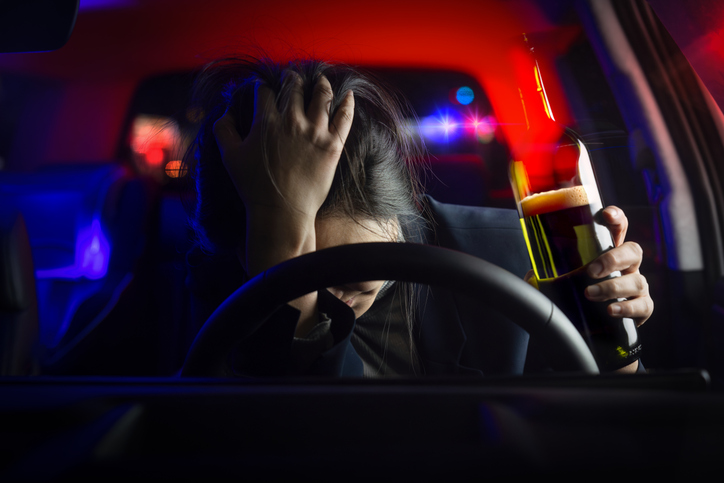
In Chicago, a DUI arrest can happen anywhere. I have represented people stopped on Lake Shore Drive, arrested in neighborhoods like Logan Square and Bridgeport, and pulled over just blocks from their homes. Many of those clients believed refusing the breath test meant their case was already lost. That assumption is wrong. Refusing a breath test triggers consequences, but it does not end your ability to fight either the DUI charge or the driver’s license suspension.
Illinois law under 625 ILCS 5/11‑501.1, known as the implied consent statute, states that anyone who drives on public roads is deemed to have consented to chemical testing if law enforcement has probable cause to believe they were driving under the influence. Refusal does not create a criminal charge by itself. Instead, it creates a separate administrative penalty through the Illinois Secretary of State called a statutory summary suspension.
Criminal cases in Illinois begin with an investigation, not a charge. A DUI investigation starts with a traffic stop, often justified by an alleged traffic violation. Officers observe behavior, speech patterns, coordination, and odor. They may ask questions designed to elicit admissions. They collect evidence such as body camera footage, dash camera video, field sobriety test performance, and statements made at the scene. Only after that investigation does an arrest occur.
All crimes in Illinois fall into two categories: misdemeanors and felonies. A first or second DUI without aggravating factors is generally a misdemeanor. A third DUI, DUI involving injury, DUI with a minor passenger, or DUI while driving on a revoked license becomes a felony. The breath test refusal itself does not determine whether the DUI is a misdemeanor or felony. That classification depends on prior history and surrounding circumstances.
In Chicago courtrooms, prosecutors pursue the DUI charge and the license suspension separately. This is critical to understand. You can win one and lose the other. You can lose one and win the other. That is why working with a Chicago criminal defense lawyer who understands both sides of the process is essential from the very beginning.
Refusal cases often give the defense leverage. Without a breath test result, the state must rely heavily on officer observations and subjective testing. That opens the door to challenges that can weaken the prosecution’s case significantly when handled correctly.
Can You Fight a Statutory Summary Suspension After a Breath Test Refusal?
Yes. Refusing a breath test does not mean you are stuck with a suspended license. Illinois law allows drivers to fight the statutory summary suspension, but the window to act is short and unforgiving. A suspension for refusal lasts twelve months for a first refusal and three years for a subsequent refusal. Those penalties are administrative, not criminal, but they are devastating if not challenged.
The suspension does not begin immediately. It typically starts forty-six days after the notice is issued. During that time, a petition to rescind the suspension can be filed. This petition creates a formal court hearing where the state must justify the suspension. That hearing is your opportunity to challenge the legality of the stop, the basis for the arrest, and whether the officer complied with the statute.
At these hearings, the state must show that the officer had reasonable grounds to believe you were driving under the influence, that you were placed under arrest, that you were properly warned about the consequences of refusal, and that you in fact refused testing. If any part of that chain is broken, the suspension can be rescinded.
In Chicago DUI cases, officers often fail to properly document warnings or rely on boilerplate language that does not reflect what actually occurred. Body camera footage sometimes contradicts the written report. Timing issues arise. The arrest may not have been lawful. These details matter, and judges do scrutinize them when presented correctly.
Many drivers also qualify for limited driving relief even while a suspension is pending. Devices such as a breath alcohol ignition interlock may allow restricted driving privileges. A Chicago DUI lawyer can determine eligibility and file the proper petitions to keep you driving while the case is pending.
Refusal cases are not automatic losses. In fact, they often provide stronger defense opportunities than cases involving breath test results. The key is acting immediately and understanding how to force the state to meet its burden.
Missed Appointments, Failed Check‑Ins, and How Judges Treat Technical Versus Substantive Violations
When someone is arrested for DUI in Chicago and released from custody, the court often imposes conditions. These may include court supervision, pretrial services check‑ins, alcohol monitoring, curfews, and payment schedules. Many people believe missing an appointment or being late on a payment is not a serious issue. Judges do not see it that way.
Illinois courts distinguish between technical violations and substantive violations, but both can damage a case if not handled properly. Technical violations include missed check‑ins, late payments, missed treatment sessions, or curfew issues. Substantive violations involve new criminal conduct, failed drug or alcohol tests, or driving on a suspended license.
Judges generally view substantive violations as a direct threat to public safety and respond harshly. Technical violations, however, are treated as indicators of compliance and credibility. Repeated technical violations tell the court that the defendant is not taking the process seriously. That perception can eliminate favorable sentencing options later, including supervision, probation alternatives, or negotiated reductions.
In refusal cases, judges often pay close attention to compliance because the underlying DUI charge may rely heavily on officer testimony. A defendant who follows every condition carefully presents far better in court than one who ignores obligations. As a Chicago criminal defense lawyer, I routinely address technical violations before they escalate. Proactive communication with the court often prevents warrants, bond revocations, or increased restrictions.
Understanding how judges think is just as important as understanding the law. DUI cases are not decided in isolation. Compliance history influences credibility, sentencing, and negotiation outcomes throughout Cook County and surrounding jurisdictions.
Evidence Collection, Trial Defense Process, and a Fictional Chicago Refusal Case
Law enforcement collects a wide range of evidence in DUI cases. This includes traffic stop justification, officer observations, field sobriety tests, chemical test refusal documentation, body camera footage, dash camera video, and station processing records. In refusal cases, the absence of chemical evidence shifts the focus to these materials.
The criminal trial process in Illinois begins with arraignment, followed by discovery, pretrial motions, hearings, and trial if the case is not resolved. During discovery, defense counsel examines every piece of evidence for inconsistencies, omissions, and constitutional violations. Motions may be filed to suppress evidence obtained through unlawful stops or arrests.
Consider a fictional case arising in the Lincoln Park area. A driver is stopped late at night for alleged lane deviation. The officer claims to smell alcohol and requests field sobriety testing. The driver declines testing and refuses the breath test at the station. A suspension notice is issued.
Upon review, body camera footage shows the vehicle did not cross lane markers. The officer’s report states otherwise. The warning regarding refusal consequences was rushed and unclear. A petition to rescind the suspension is filed, along with a motion to suppress evidence due to lack of reasonable grounds.
At hearing, the officer’s testimony conflicts with video evidence. The judge rescinds the suspension. Without chemical evidence and with suppressed observations, the DUI charge is later dismissed. This outcome is not rare when refusal cases are handled aggressively and early.
Trial defense in Illinois requires methodical preparation and courtroom experience. Prosecutors must prove impairment beyond a reasonable doubt. Without a breath test, that burden becomes significantly harder when the defense knows how to expose weaknesses.
Legal Defenses, Choosing the Right Attorney, and Questions to Ask in a Consultation
Refusal cases involve multiple legal defenses. These include lack of reasonable suspicion for the stop, lack of probable cause for arrest, improper warnings, unlawful detention, flawed field sobriety administration, and inconsistent officer testimony. Each defense must be raised strategically at the right stage of the process.
Choosing a criminal defense attorney in Illinois requires careful consideration. You want someone who regularly handles DUI refusal cases, understands Cook County court procedures, and personally manages cases rather than delegating them. Experience in license suspension hearings is critical.
During a free consultation, you should ask how refusal cases are handled, what deadlines apply, how often license suspensions are successfully challenged, and whether the attorney will personally appear in court. You should ask how technical violations are managed and what steps are taken to protect your record.
Having an attorney is not optional in refusal cases. Without legal representation, deadlines are missed, hearings are waived unintentionally, and defenses are never raised. The consequences of a suspended license and DUI conviction last far beyond the courtroom.
Chicago Criminal Defense FAQs Under Illinois Law
Drivers in Chicago often ask whether refusing the breath test guarantees license suspension. The answer is no. The suspension can be challenged, and many are rescinded when officers fail to meet statutory requirements.
Another common question involves whether refusal makes a DUI case stronger for the prosecution. In reality, refusal often weakens the case by removing scientific evidence. Prosecutors must rely on subjective observations that are frequently contradicted by video.
People also ask whether refusal is admissible at trial. Refusal can be introduced as evidence, but it does not prove impairment. Judges instruct juries accordingly.
Questions also arise about driving relief during suspension. Many drivers qualify for restricted driving permits. These options must be pursued correctly and promptly.
Clients also ask whether technical violations ruin their case. They do not automatically, but repeated issues can influence outcomes if not addressed immediately.
Another frequent concern is whether refusal impacts felony classification. Refusal does not change the charge level. Prior convictions and aggravating factors determine whether a DUI is a misdemeanor or felony.
Each case is unique, and blanket advice is dangerous. Individual analysis by a Chicago criminal defense lawyer remains essential.
Why You Need an Attorney and Why Clients Choose The Law Offices of David L. Freidberg
Refusing a breath test is not the end of your case. It is the beginning of a complex legal process that demands immediate and skilled representation. Handling this alone is a serious mistake. Prosecutors and judges will not explain your rights or protect your interests.
At The Law Offices of David L. Freidberg, I have defended refusal cases throughout Chicago, Cook County, DuPage County, Will County, and Lake County for decades. I understand how these cases are prosecuted and how they are won.
Clients choose my firm because we take action immediately, challenge every assumption, and protect both driving privileges and criminal records. We do not wait for problems to arise. We prevent them.
Why Defendants Choose The Law Offices of David L. Freidberg
Clients facing DUI charges in Chicago need more than reassurance. They need action. At The Law Offices of David L. Freidberg, I focus on immediate defense, aggressive motion practice, and protecting driving privileges whenever possible.
I represent clients throughout Chicago, Cook County, DuPage County, Will County, and Lake County. My approach is built on preparation, accountability, and courtroom advocacy.
When You Need a Fighter, Call Us!
Whether you’re charged in downtown Chicago, Skokie, Maywood, Bridgeview, or Rolling Meadows, we’re ready. We appear regularly in courtrooms throughout Cook, DuPage, Will, and Lake Counties. And we don’t treat aggravated speeding as just another moving violation.
If you were arrested in Chicago, protect your future by contacting The Law Offices of David L. Freidberg. We have decades of experience handling DUI cases in Illinois. Our firm is available 24/7 to provide the legal defense you deserve.
Contact us today at (312) 560-7100 or toll-free at (800) 803-1442 for a free consultation. We’re available 24/7 to serve clients throughout Illinois, Cook County, DuPage County, Will County, and Lake County.