

I Don’t Know What I Would
Have Done Without Him...
How Law Enforcement Errors Can Get Your Chicago DUI Case Tossed Out
Police Mistakes Can Destroy a DUI Case: Why This Matters in Chicago
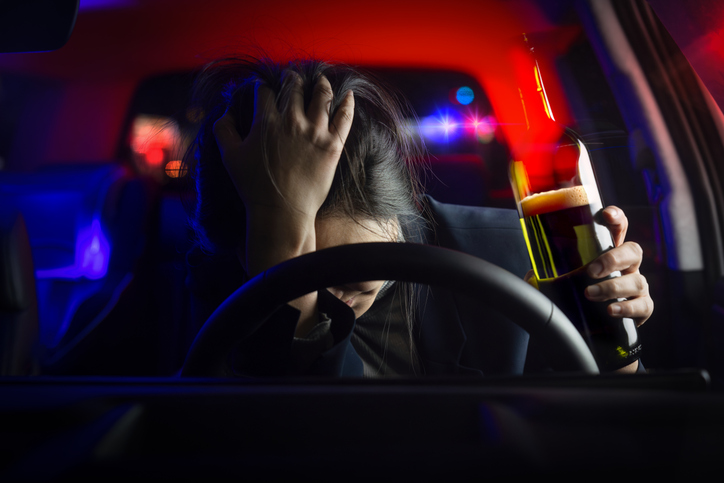
Chicago is one of the busiest metropolitan areas in the country, and police officers in Cook County and the surrounding suburbs are often under pressure to make quick decisions during DUI stops. But in that rush, mistakes are made. As a DUI defense lawyer in Chicago, I’ve seen it firsthand: procedural errors, unlawful traffic stops, faulty breathalyzers, body cam problems, and sloppy police reports can make or break a DUI case.
Under Illinois law, driving under the influence is governed by 625 ILCS 5/11-501. A first-time DUI is usually a Class A misdemeanor, carrying up to 364 days in jail, a fine of up to $2,500, and a mandatory license suspension. But if certain aggravating factors are present—such as a child in the vehicle, high BAC, injury, or multiple prior offenses—it can rise to a Class 4 felony or higher. That means potential prison time and lifelong consequences.
What many defendants don’t realize is that law enforcement errors can invalidate everything—from the stop itself to the breath test results. These mistakes can lead to the case being reduced or dismissed entirely. That’s why it’s essential to understand how the criminal process works, how evidence is collected, and what defenses are available when you’re facing DUI charges in Chicago or the surrounding areas like DuPage County, Will County, and Lake County.
When the Stop Itself Was Illegal: Fourth Amendment Violations
A DUI case in Illinois begins when a police officer stops a driver under the suspicion of impaired driving. This stop must comply with both the Fourth Amendment of the U.S. Constitution and Article I, Section 6 of the Illinois Constitution. If the stop was not supported by reasonable suspicion, then every piece of evidence that follows—breath tests, observations, admissions—may be suppressed under the exclusionary rule.
In Chicago, traffic stops commonly occur near popular bar areas like River North, Wicker Park, or along Lake Shore Drive. Officers may claim to see weaving, speeding, or other traffic infractions. But without clear and articulable reasons for the stop, the entire case may be thrown out.
I’ve had cases dismissed when we proved the squad car video did not match the officer’s account of the driving behavior. If the stop is illegal, the case crumbles. Police don’t get a free pass to pull you over based on a hunch.
Body Camera Failures and Police Report Discrepancies
In 2023, the Chicago Police Department reaffirmed its policy on mandatory body camera use during DUI investigations. If the footage is missing, cut off, or contradicts the police narrative, we can use that to challenge the credibility of the entire case.
In one DUI arrest in the South Loop, the body cam footage ended abruptly before the breath test was administered. That alone raised serious questions. When we pressed the issue during pretrial hearings, it became clear that the arresting officer violated department policy. The judge suppressed the breathalyzer results, and the case was dropped.
Sometimes it’s not about what’s on camera—it’s what’s not. The absence of video, combined with vague or inconsistent police reports, can give a skilled Chicago DUI lawyer the leverage needed to attack the prosecution’s case.
Flawed Field Sobriety and Breath Test Procedures
In Illinois, officers are trained to administer Standardized Field Sobriety Tests (SFSTs): the walk-and-turn, the one-leg stand, and the horizontal gaze nystagmus (HGN). These tests are highly subjective and must be conducted under specific conditions and instructions outlined by the National Highway Traffic Safety Administration (NHTSA).
If you were asked to perform field tests on uneven pavement in the middle of a snowy Chicago winter, those results are not reliable. Even medical conditions or shoes can skew the results. We investigate whether:
- You were given clear instructions
- The surface was safe and level
- Weather affected your performance
- The officer followed NHTSA protocol
Breath tests are another major area of attack. Illinois uses breathalyzer devices like the Intox EC/IR II, and officers must be certified to use them. The machine must be calibrated, maintained, and tested regularly under Title 20, Part 1286 of the Illinois Administrative Code. If we find lapses in documentation or procedures, the BAC reading may be tossed out.
DUI Arrests in Chicago: What You’re Really Up Against
Once arrested for DUI, you’re not just fighting the criminal charge—you’re also facing administrative penalties through the Illinois Secretary of State. A Statutory Summary Suspension of your driver’s license kicks in 46 days after your arrest unless you request a hearing within 90 days.
You’ll be booked at a Chicago police district or suburban jail, fingerprinted, and held until bond is set. The criminal case begins at an arraignment, often at the Richard J. Daley Center or a branch court like 555 W. Harrison. From there, pretrial motions, evidence hearings, and trial dates are scheduled.
Convictions come with more than just court fines or jail. A DUI on your record can:
- Ruin job prospects in healthcare, education, government, or commercial driving
- Trigger mandatory alcohol education and treatment
- Hike insurance premiums or cause cancellation
- Jeopardize professional licenses
That’s why we scrutinize every police action—starting from the traffic stop, to the field sobriety tests, to the paperwork submitted to the State’s Attorney’s Office.
Real Case Example: Police Missteps Lead to Case Dismissal
In a case out of Logan Square, a man was stopped after allegedly running a stop sign. The officer claimed he smelled alcohol and observed slurred speech and red eyes. The driver submitted to a portable breath test that showed a BAC just over the limit.
But our defense team uncovered multiple flaws:
- The body cam was not activated until after the traffic stop was underway
- The officer’s report mentioned “weaving” despite no mention of it in dispatch logs
- The breath test device had not been calibrated in over 30 days
We filed a motion to suppress based on Fourth Amendment violations and evidentiary integrity issues. The judge granted our motion, and the State dropped all charges. The client’s record was later sealed under Illinois expungement laws.
This is the power of an experienced DUI attorney in Chicago. The evidence wasn’t strong enough to withstand legal scrutiny—because we knew where to look and what to challenge.
Why You Need a Criminal Defense Lawyer at Every Stage
From the moment you’re pulled over, every decision law enforcement makes can be challenged—but only if you have someone in your corner who knows how Illinois criminal courts really work.
A Chicago criminal defense attorney helps at every phase:
- Investigates how and why the traffic stop occurred
- Demands body cam footage, dispatch audio, and maintenance records
- Cross-examines police officers in suppression hearings
- Challenges BAC test results under Illinois law
- Pushes for case dismissal or reduced charges
- Protects your rights during trial or negotiations
Without a lawyer, you’re relying on the State to tell you what evidence they have and hoping they’ll do the right thing. But DUI convictions are political in Cook County—and prosecutors don’t give favors.
Legal Defenses in Chicago DUI Cases
Every DUI case is different, but common defenses include:
- Illegal Stop: No reasonable suspicion for the traffic stop
- Unreliable BAC: Faulty breath machine, expired calibration, operator error
- Medical Condition: Acid reflux or diabetes falsely inflating BAC
- Improper Field Tests: Officer didn’t follow NHTSA standards
- No Body Cam Footage: Lack of video evidence hurts prosecution credibility
- Rising BAC Defense: BAC increased after arrest due to alcohol absorption delay
Each of these defenses requires a tailored strategy and aggressive pretrial litigation. Most DUI defenses aren’t found on the surface—you need someone who knows where to dig and how to force the State to meet its burden of proof.
What To Ask When You Speak To a DUI Lawyer in Chicago
If you’re meeting with a defense lawyer for the first time, ask:
- How often do you handle DUI cases in Cook County?
- Will you personally review the squad car and body cam footage?
- Do you file motions to suppress and challenge test results?
- Can you appear in court with me or on my behalf?
- Have you won cases like mine in local courts?
You should feel confident that the lawyer knows local procedures and prosecutors. DUI law is highly technical—don’t settle for someone who dabbles in it. At my firm, I personally handle every case from start to finish.
Why Clients Choose The Law Offices of David L. Freidberg
Fighting a DUI without an attorney is a mistake. You’ll be outmatched by the State, lose key evidence opportunities, and face harsh consequences for even minor errors.
At The Law Offices of David L. Freidberg, I bring decades of criminal trial experience to every case. I understand how Chicago police operate. I know how prosecutors think. And I’ve helped hundreds of clients protect their freedom, license, and reputation.
Whether your DUI happened in Chicago, Oak Lawn, Skokie, Naperville, or anywhere in Cook County, DuPage County, Will County, or Lake County—we’re ready.
When You Need a Fighter, Call Us!
Whether you’re charged in downtown Chicago, Skokie, Maywood, Bridgeview, or Rolling Meadows, we’re ready. We appear regularly in courtrooms throughout Cook, DuPage, Will, and Lake Counties. And we don’t treat aggravated speeding as just another moving violation.
If you were arrested in Chicago, protect your future by contacting The Law Offices of David L. Freidberg. We have decades of experience handling DUI cases in Illinois. Our firm is available 24/7 to provide the legal defense you deserve.
Contact us today at (312) 560-7100 or toll-free at (800) 803-1442 for a free consultation. We’re available 24/7 to serve clients throughout Illinois, Cook County, DuPage County, Will County, and Lake County.