

I Don’t Know What I Would
Have Done Without Him...
Can You Beat a DUI in Illinois If You Failed the Breath Test? The Answer May Surprise You!
Chicago Drivers Face Tough DUI Laws—But Failing the Breath Test Doesn’t Mean You’re Guilty
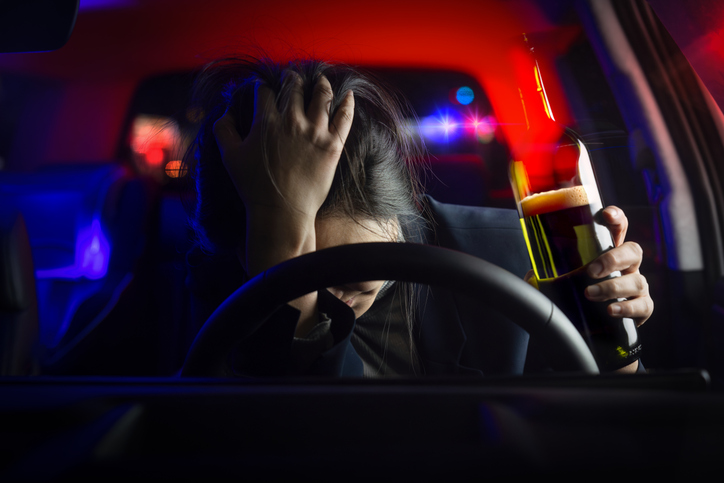
In Chicago, driving under the influence (DUI) charges are aggressively prosecuted. If you’ve been arrested in areas like Wicker Park, Bronzeville, or Humboldt Park, and blew over the legal limit, it’s normal to assume a conviction is guaranteed. But that isn’t always true. Many drivers are surprised to learn that even after failing a breathalyzer test, their DUI charges can still be challenged.
Under Illinois law, most DUI arrests are misdemeanors, but certain aggravating factors—such as prior DUI convictions, having a minor in the vehicle, or causing injury—can elevate the charge to a felony. Whether charged with a Class A misdemeanor or a Class 4 felony, both carry serious consequences in Cook County and across Illinois.
The Chicago Police Department and Illinois State Police often rely heavily on breath test results when making DUI arrests. However, these tests aren’t infallible. Breathalyzers must be properly calibrated, the operator must be certified, and the test must be administered according to strict state guidelines. When these procedures are not followed exactly, the results can be challenged—and sometimes excluded entirely.
Even with a failed test, your defense starts the moment you’re stopped. Whether you were pulled over for erratic driving on I-90 or stopped at a DUI checkpoint in River North, the sequence of events matters. Everything from the traffic stop, the field sobriety tests, and the manner in which the breath test was administered must be closely examined. As a DUI defense lawyer in Chicago with decades of trial experience, I know how to spot flaws in the prosecution’s case.
If you’re facing DUI charges, don’t assume you’re out of options. Even if you blew a 0.12 or higher, that number alone doesn’t equal guilt under Illinois law. You have rights, and with the right legal strategy, a conviction is far from guaranteed.
The Illinois Criminal Case Process: From Stop to Courtroom
Once you’re pulled over in Chicago for suspected DUI, the criminal process begins quickly. Law enforcement officers are trained to observe your behavior closely: bloodshot eyes, the smell of alcohol, slurred speech, and your ability to respond to instructions are all documented. This subjective evidence forms the basis of the DUI arrest—often before any chemical test is administered.
After the arrest, you’ll be booked and charged. Most first-time DUIs are charged under 625 ILCS 5/11-501, which prohibits driving with a blood alcohol concentration (BAC) of 0.08 or more. For those under 21, Illinois’s zero-tolerance law applies under 625 ILCS 5/11-501.8.
You’ll receive a court date for your arraignment at one of the Cook County courthouses—often the Richard J. Daley Center or the Cook County Criminal Court Building. At this stage, you’ll enter a plea, and the case moves to pre-trial and possibly trial.
Judges in Cook, DuPage, Lake, and Will Counties take DUI charges seriously, especially if there are prior offenses. That’s why every decision—from plea bargaining to filing suppression motions—should be handled by an experienced Chicago DUI defense lawyer.
In the meantime, the State’s Attorney begins building their case. They’ll rely on officer body cam footage, police reports, and chemical test results. They may also bring in an expert to testify about the breathalyzer’s accuracy. The process is adversarial from the start. If you don’t have legal representation, you’re likely to miss key opportunities to challenge weak evidence or negotiate a favorable resolution.
Realistic DUI Case Example: South Loop Arrest with a Suppressed Breath Test
A recent case handled by our firm involved a man arrested for DUI near South Loop. He had left a late dinner and was pulled over for an improper lane change. The officer claimed he smelled alcohol and initiated a DUI investigation. The driver complied with the breathalyzer test, which showed a BAC of 0.10. He was charged with DUI and faced a six-month license suspension.
After reviewing the dash cam footage and booking procedures, we discovered the breathalyzer machine had not undergone required maintenance within the last 62 days, a direct violation of Illinois Administrative Code requirements. Further, the arresting officer had not completed recertification training.
We filed a motion to suppress the breath test results, arguing that the evidence was unreliable. The judge granted the motion, significantly weakening the prosecution’s case. Without chemical test evidence, the remaining evidence—a slightly swerving vehicle and slurred speech—was insufficient for conviction. The State offered to reduce the charge to reckless driving, and our client accepted, avoiding a DUI on his record.
This example illustrates the value of a strategic defense, even when the breath test appears damaging.
What Evidence Do Illinois Police Use in DUI Cases?
Beyond the breathalyzer, law enforcement collects a wide range of evidence in DUI cases. This includes dash cam footage, body cam audio, field sobriety test performance, and officer testimony. If you’re involved in a crash, witness statements and accident reconstruction reports may also be used.
Field sobriety tests—like the walk-and-turn or one-leg stand—are notoriously subjective. Officers may misinterpret results or fail to account for physical conditions that mimic impairment. These tests are supposed to be standardized, but not every officer follows protocol.
Police reports are another key piece of evidence, but they’re not immune to challenge. Officers often use boilerplate language, making it easier to point out inconsistencies or exaggerations. In cases involving breath or blood tests, the prosecution must also establish a clear chain of custody and testing compliance.
When you’re represented by a criminal defense attorney in Chicago, every piece of evidence is scrutinized. If your rights were violated at any stage—from the traffic stop to the arrest—suppression of evidence may be possible. Without critical evidence, the State’s case weakens, and you have a better chance of dismissal or a reduced charge.
Missed Check-ins, Curfews, and Late Payments: Technical Violations vs. New Crimes
DUI cases often intersect with probation terms, especially when a sentence includes supervision or conditional discharge. In Chicago, many defendants face violations after their plea—not because of new arrests, but due to technical issues like missed check-ins, curfew violations, late payments for court fines, or treatment program attendance failures.
Illinois courts distinguish between technical and substantive probation violations. A new DUI arrest while on probation is substantive. But being late to a probation meeting or missing a curfew check-in is considered a technical violation.
Judges in Cook County handle these violations differently. Technical violations may lead to warnings or increased supervision terms, while substantive violations can result in revoked probation and jail time.
Still, multiple technical violations can cause a judge to lose confidence in the defendant’s commitment to follow the law. That’s why even minor slip-ups should be taken seriously and explained to the court with supporting documentation or legal representation. A criminal defense attorney can often negotiate on your behalf to prevent revocation.
Legal Defenses That May Beat a DUI in Illinois—Even With a Failed Breath Test
Even when a breath test result appears conclusive, several legal defenses may apply under Illinois law. These include:
Improper Stop – If the officer lacked reasonable suspicion to stop your vehicle, any evidence collected afterward, including the breath test, can be thrown out.
Breathalyzer Error – Machines must be properly calibrated and tested regularly. Malfunctions or expired certifications may render results inadmissible.
Medical Conditions – Acid reflux, diabetes, and other conditions can create falsely elevated BAC readings due to residual mouth alcohol or chemical interference.
Violation of Rights – If you weren’t informed of your right to refuse chemical testing or were coerced into a test, the results may be excluded.
Field Sobriety Flaws – Subjective officer interpretations of field tests are challengeable, especially when the tests were performed improperly or the driver had a physical limitation.
Chain of Custody Issues – In cases involving blood tests, the prosecution must prove the sample was properly handled. A break in the chain can disqualify the evidence.
These strategies are tailored to the facts of each case. That’s why DUI defense in Illinois isn’t about one-size-fits-all solutions. Your attorney should be deeply familiar with both DUI law and local court procedure.
Why You Need a Criminal Defense Attorney for Every Step of a DUI Case
The criminal defense process in Chicago involves several stages, each requiring decisions that can affect the outcome of your case. From bond hearings to arraignment, pre-trial motions, suppression hearings, and trial, a qualified attorney is your voice.
Without legal counsel, you might unintentionally waive your rights or miss critical filing deadlines. For example, you only have 90 days to challenge the statutory summary suspension of your driver’s license. A criminal defense attorney will file that petition and appear at the hearing to argue for restoration of your driving privileges.
Additionally, prosecutors may pressure unrepresented defendants into accepting unfavorable plea deals. A skilled attorney knows when to negotiate, when to push back, and when to take the case to trial.
In short, having a Chicago DUI defense lawyer from the outset maximizes your chances of avoiding a conviction, saving your license, and protecting your future.
What to Look For When Hiring a DUI Defense Lawyer in Illinois
When choosing a defense attorney, consider the following qualities:
They should have a deep understanding of Illinois DUI law and trial experience in Cook, DuPage, Will, and Lake Counties. They must know how local prosecutors handle plea deals and which judges are more likely to grant suppression motions. A good attorney will take time to explain your case, answer your questions, and offer a real defense strategy—not just promises.
You should ask:
What’s your experience with DUI trials in this county?
Have you challenged breath tests before?
How often do your clients avoid conviction?
Do you handle DMV hearings?
Will you be the attorney actually handling my case?
These questions can help you determine if the lawyer is committed, qualified, and prepared to fight.
Why You Need The Law Offices of David L. Freidberg for DUI Defense in Chicago
DUI charges in Illinois can derail your life. A conviction can lead to license suspension, jail time, heavy fines, and a criminal record that affects your job, housing, and future. Public defenders are overloaded. Prosecutors are relentless. The law is complicated. That’s why you need an aggressive, experienced attorney on your side.
The Law Offices of David L. Freidberg has defended thousands of DUI cases across Chicago, Cook County, and surrounding areas. We challenge breath test results, cross-examine officers, and push back on sloppy prosecutions.
When You Need a Fighter, Call Us!
Whether you’re charged in downtown Chicago, Skokie, Maywood, Bridgeview, or Rolling Meadows, we’re ready. We appear regularly in courtrooms throughout Cook, DuPage, Will, and Lake Counties. And we don’t treat aggravated speeding as just another moving violation.
If you were arrested in Chicago, protect your future by contacting The Law Offices of David L. Freidberg. We have decades of experience handling DUI cases in Illinois. Our firm is available 24/7 to provide the legal defense you deserve.
Contact us today at (312) 560-7100 or toll-free at (800) 803-1442 for a free consultation. We’re available 24/7 to serve clients throughout Illinois, Cook County, DuPage County, Will County, and Lake County.