

I Don’t Know What I Would
Have Done Without Him...
What Is a Federal Drug Conspiracy Charge Under 21 U.S.C. § 846?
Understanding Federal Drug Conspiracy Charges in Chicago, Illinois
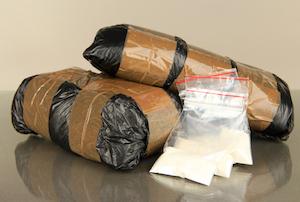
Chicago has long been a focal point for federal drug conspiracy investigations. With its position as a major Midwest transportation hub, the city is frequently targeted by federal law enforcement for its links to national and international narcotics distribution. Cases involving heroin, cocaine, methamphetamine, fentanyl, marijuana, and prescription drugs are routinely prosecuted in federal court under 21 U.S.C. § 846, which governs drug conspiracy.
The law states that “[a]ny person who attempts or conspires to commit any offense defined in this subchapter shall be subject to the same penalties as those prescribed for the offense.” In other words, even if you didn’t personally distribute or possess drugs, agreeing to be part of a drug operation—even in a limited role—can result in federal charges that carry the same mandatory minimum sentences as actual distribution.
In Chicago, federal conspiracy charges are often brought by the U.S. Attorney’s Office for the Northern District of Illinois, with investigations led by the DEA, FBI, ATF, or Homeland Security. Prosecutors use 21 U.S.C. § 846 to target not just drug dealers, but anyone accused of helping with logistics, finances, communications, or planning related to drug trafficking.
Crimes prosecuted under federal drug laws are classified as felonies, and the consequences are severe. Depending on the quantity and type of drug, penalties include mandatory minimum prison sentences ranging from five years to life, significant fines, federal probation, and asset forfeiture. Unlike state charges, there is no parole in the federal system.
This makes drug conspiracy charges under § 846 some of the most dangerous a person can face—especially in Chicago, where prosecutors often name multiple individuals in a single indictment, using wiretaps, confidential informants, and surveillance to build cases. Even if you never touched a single gram of narcotics, being part of the alleged agreement is enough to bring down the full weight of the federal criminal system.
Understanding how federal charges develop—and how a Chicago criminal defense lawyer can respond—is crucial for anyone facing a § 846 indictment.
How Federal Drug Conspiracy Cases Are Built in Illinois
Federal drug conspiracy cases do not require proof that you completed the offense. The government does not need to show that drugs were delivered, transported, or sold by you. Instead, prosecutors must prove that:
- Two or more people entered into an agreement to violate federal drug laws
- You knowingly and voluntarily became a part of that agreement
This is a broad standard, and it allows the government to charge individuals based on phone calls, text messages, financial transactions, or even alleged associations. In many § 846 cases prosecuted in Chicago, the indictment includes a large number of co-defendants—often charged based on their alleged roles within the operation.
Federal investigations typically begin months or even years before arrests. Agencies may use:
- Court-authorized wiretaps
- GPS tracking devices
- Pole cameras
- Confidential informants (CIs)
- Cooperating witnesses
- Cell phone extractions
- Bank and financial records
- Search warrants
All of this evidence is compiled before the indictment is unsealed. Many defendants have no idea they were under investigation until agents arrive with an arrest warrant.
Once charged, defendants appear in federal court—usually at the Dirksen Federal Building in downtown Chicago. At the initial appearance, the judge determines whether the defendant should be held or released pending trial. In drug conspiracy cases involving serious quantities, the government often seeks detention. Bond is not a guarantee in federal court, especially when mandatory minimum sentences are on the table.
A Chicago federal criminal defense lawyer plays a vital role in fighting for pretrial release, challenging the indictment, and demanding early access to discovery—including wiretap applications and recordings. We assess whether the client’s rights were violated during surveillance or arrest, and whether the evidence actually supports a knowing agreement to commit a drug crime.
A fictional example from the Englewood neighborhood illustrates this: A man is arrested in a DEA takedown. He’s accused of supplying phones to members of a drug ring. The indictment lists him as a co-conspirator under § 846, even though he never handled the drugs. We review the evidence, find that the phone calls were vague, and the surveillance is circumstantial. We argue that he had no knowledge of the drug conspiracy. This approach can lead to dismissal, a favorable plea, or even acquittal.
Federal conspiracy charges require skilled legal representation. Without a lawyer who understands how to dissect complex investigations and challenge conspiracy logic, the consequences can be life-changing.
The Federal Criminal Court Process in Chicago and What to Expect
Federal criminal cases in Chicago follow a different path than those in state court. From indictment to sentencing, every step moves quickly and with high stakes. Once a person is charged under 21 U.S.C. § 846, they are placed under the jurisdiction of the U.S. District Court. A federal magistrate judge will conduct the initial appearance, where the issue of pretrial detention is addressed.
Following that, the defendant will appear for an arraignment, where formal charges are read and a plea is entered. Discovery begins shortly thereafter. In complex drug conspiracy cases, discovery may involve thousands of pages of documents, hours of audio, and extensive surveillance evidence.
Pretrial motions are critical. A Chicago federal criminal defense lawyer may file motions to suppress wiretap recordings, challenge search warrants, or move to sever a client’s case from co-defendants. Severance can be especially important when one defendant’s involvement is minimal and overshadowed by more serious players in the conspiracy.
If the case proceeds to trial, the government must prove beyond a reasonable doubt that the defendant joined the conspiracy knowingly and voluntarily. That standard can be challenged at every stage. Were the phone calls ambiguous? Did the government rely on hearsay or unverified informants? Were the alleged acts part of legal activity taken out of context?
Throughout the federal court process, the United States Sentencing Guidelines play a major role. Judges use the guidelines to determine recommended sentencing ranges based on the drug type, quantity, criminal history, and role in the offense. Mandatory minimums often override discretion. However, with effective negotiation or through use of sentencing mitigation, it is sometimes possible to avoid minimums by seeking safety valve relief or cooperating with the government—if doing so is in the client’s best interest.
A federal conspiracy charge can impact every area of life. Beyond prison time, convictions may result in asset forfeiture, immigration consequences, firearm bans, employment issues, and long-term damage to a person’s reputation. There is no “light” version of a federal drug conspiracy charge. Every defendant needs a defense attorney who understands both the law and the courtroom strategies that work in Chicago’s federal courts.
Why You Need a Federal Criminal Defense Lawyer for a § 846 Charge
Being charged with a federal drug conspiracy under 21 U.S.C. § 846 is not just another legal problem—it is a direct threat to your freedom, future, and family. These are not minor cases. They are built on months of surveillance, supported by agents trained in complex investigations, and prosecuted by Assistant U.S. Attorneys with nearly unlimited resources.
Without an attorney who knows how to handle federal criminal cases, a defendant is at a major disadvantage. The federal system is unforgiving. There is no parole. Sentences are longer. Prosecutors are aggressive. The rules of procedure are different than state court. Pretrial detention is more likely. And once convicted, appeals are limited.
As a long-time Chicago criminal defense attorney, I understand how these cases are built and how to break them down. I know how to challenge conspiracy allegations, protect your rights, suppress illegal evidence, and negotiate from a position of strength—not desperation.
We begin by demanding every piece of evidence. We investigate the weaknesses in the government’s case. We isolate your role and argue that mere association is not enough. We scrutinize informant credibility. We fight for release if you’re detained. We prepare you for each hearing. And we make sure that your future isn’t decided based on vague allegations or guilt by association.
A federal charge does not mean a guaranteed conviction. Many clients accused under § 846 have seen charges reduced, dismissed, or beaten at trial. It starts with the right defense strategy and the right representation.
Why Clients Facing Federal Drug Charges Trust The Law Offices of David L. Freidberg
When your future is on the line, you need more than just a lawyer. You need someone who understands the difference between state and federal court, who has stood before federal judges in Chicago’s Dirksen courthouse, and who knows what it takes to win in the federal system.
At The Law Offices of David L. Freidberg, we bring decades of criminal defense experience to every federal drug conspiracy case. We fight aggressively for clients in Chicago, Cook County, DuPage County, Will County, and Lake County, defending against the most serious charges brought under 21 U.S.C. § 846 and related statutes.
We treat every case with urgency, precision, and purpose. If you or a loved one has been indicted in a federal drug conspiracy case, don’t wait. The investigation is already well underway. It’s time to fight back with legal representation that knows how to handle high-stakes federal charges.
Call The Law Offices of David L. Freidberg 24/7 for Federal Drug Conspiracy Defense
If you are facing a federal indictment under 21 U.S.C. § 846, call The Law Offices of David L. Freidberg today.
We’re available 24 hours a day, 7 days a week. Contact us today at (312) 560-7100 or toll-free at (800) 803-1442 for a free consultation.
We’ll answer your questions. We’ll explain your rights. And we’ll start building your defense.